Medicine Buddha Dharma Assembly
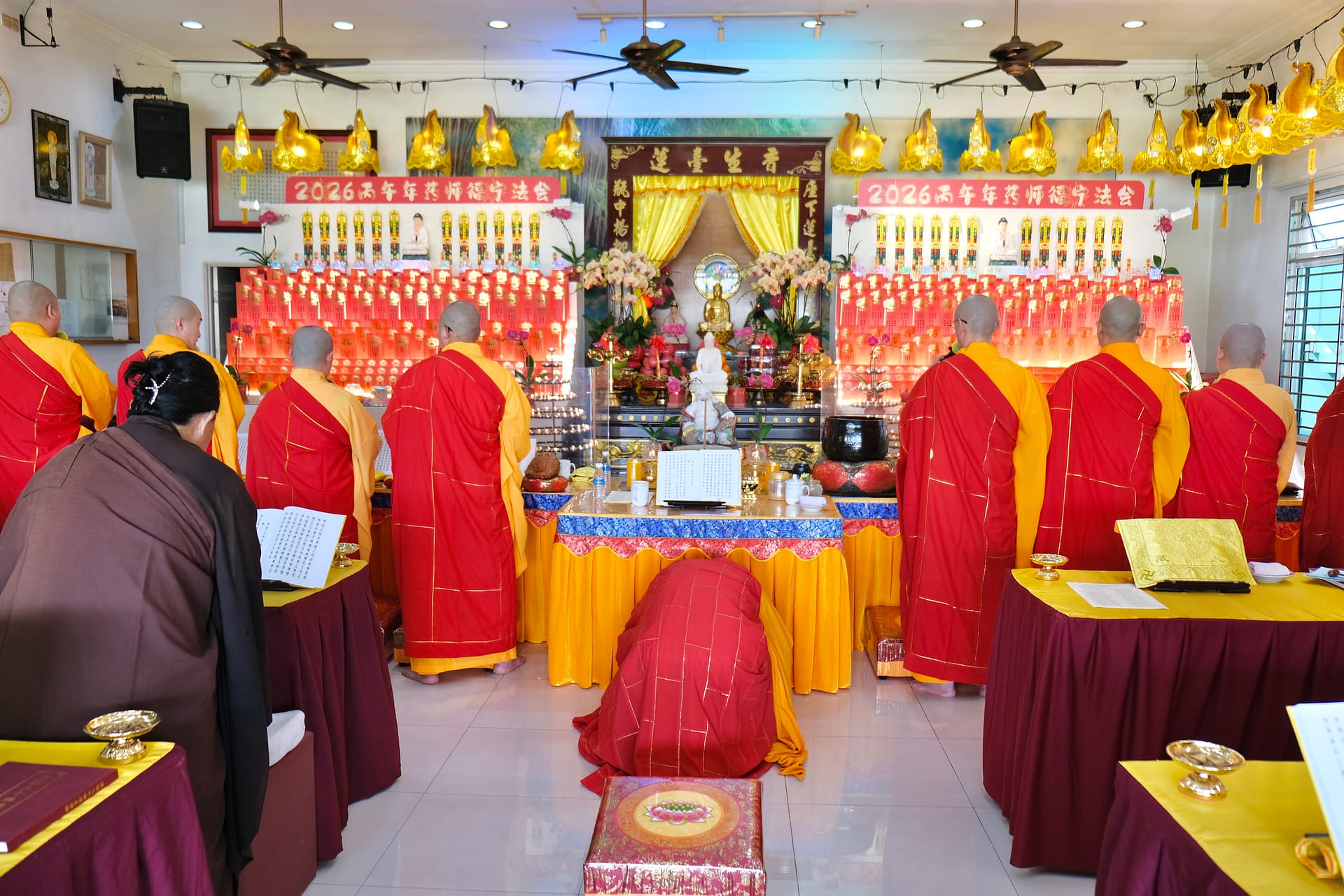
以下是药师佛法会期间所念诵经文
i) 药师忏法仪轨
ii) 药师宝忏
The Liturgy of Medicine Buddha (Yaoshi Bao Chan) is a Buddhist repentance practice rooted in the Medicine Buddha Sutra. Through reverence to Medicine Buddha and ritual practice, it helps followers purify karmic obstacles, dispel misfortune, and attract blessings.The text, divided into three volumes, weaves Medicine Buddha’s Twelve Great Vows into its rituals, guiding practitioners through steps like setting vows, repentance, paying homage, and mantra recitation.
The key focus is deep sincerity and connecting with Medicine Buddha’s vows. It is believed that dedicated practice not only purifies past karma but also brings health, peace, and fulfillment of wishes. This practice reflects Buddhism’s dual focus on both removing misfortune and attaining libera.
iii) 佛说三千佛洪名宝忏
The “Offering to Buddhas and Celestials” (Gongfo Zhaitian) ceremony, rooted in the Golden Light Sutra, is a sacred Buddhist ritual honoring Buddhas, bodhisattvas, and celestial Dharma protectors.
Through pure offerings – flowers, fruits, incense, and light – it expresses gratitude to guardians like the Twenty-Four Celestial Devas and nature deities, while repenting for collective karmic debts. The ritual harmoniously blends worldly prayers (peace, health, longevity) with spiritual aims (letting go of ego, accumulating wisdom). By bowing and making vows, participants nurture present blessings and plant seeds
for future enlightenment. Its uniqueness lies in transforming traditional worship into mindful practice – using symbolic acts to awaken awareness of life’s interconnectedness.
iv) 供佛斋天
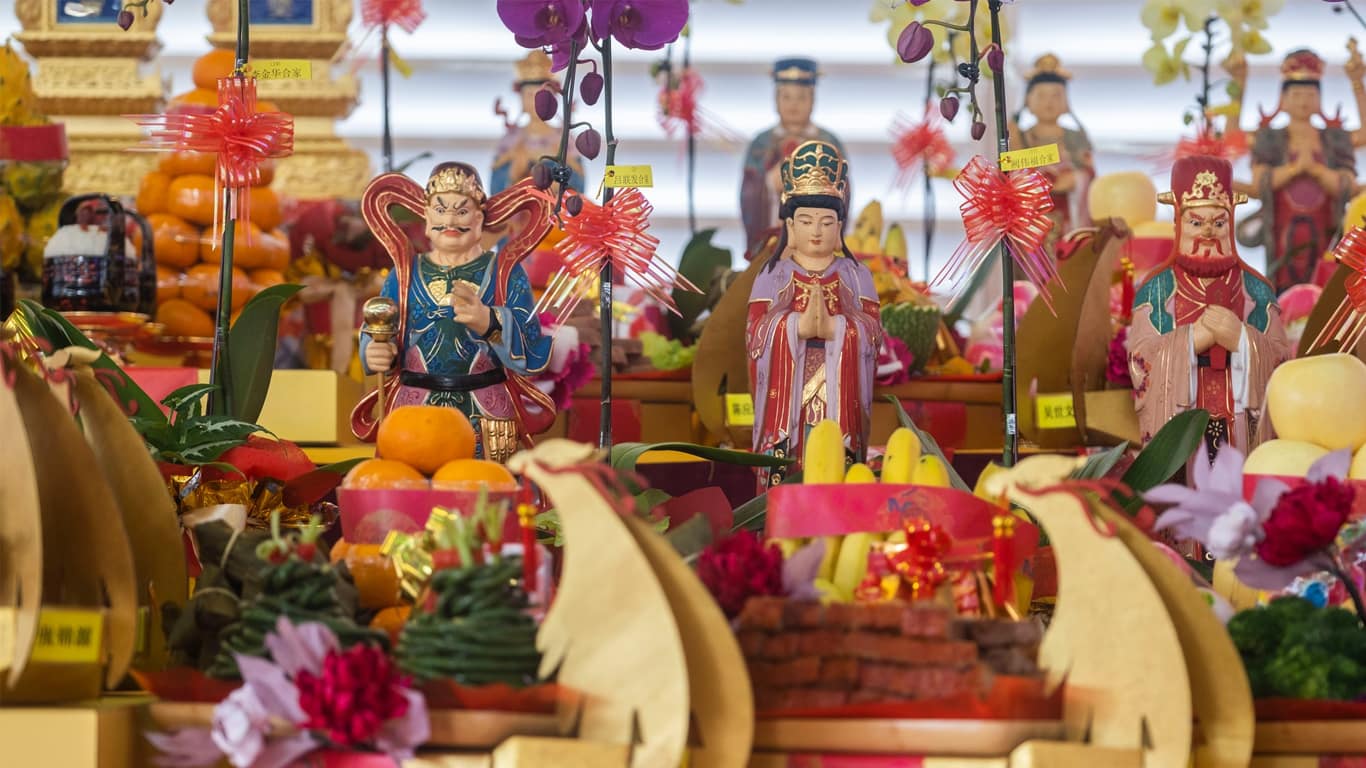
“金光明忏法”或“供佛斋天”是根据《金光明经》制定的一种庄严而隆重的法会仪式,按照教义规矩,恭敬地欢迎和礼拜佛、菩萨、声闻缘觉、历代祖师圣贤,甚至祭祀了法界的各种天神,包括大梵天、帝释天、护世四天王、金刚密迹、散脂大将、天龙八部,以及各个名山大川的神明。
据《金光明经》的记载,这些天神们在金光明法会上都在佛前发愿成就菩提心,并受到佛陀的法敕,一直护佑着那些持诵、朗诵和抄写《金光明经》的人。由于这些天神奉持佛陀的嘱咐,巡行在人间,帮助有德行的人,奖励善行,制止恶行。因此,人们建立了斋天法会,通过诵经礼忏、奉上清净的食物,来供养十方世界的三宝(佛、法、僧)、护世天神和他们的随扈。
斋天法会是为了祈求福报,保佑个人平安的佛教法会。通过礼忏和供奉食物给天神,借助于功德和大愿力,为了所有世界的众生清除罪业,化解冤仇,放弃恶行,修持善行,发愿努力,希望国土和人民都能受到佛菩萨的庇佑和四天王的保护。其本意是祈愿国家繁荣昌盛,社会安宁稳定,人民幸福安居,功德增长,寿命延长。
斋天法会也提醒我们每个人都应避免作恶,多行善事,这样福报就会自然而然地降临。通过斋天法会的仪式,我们希望自己和他人能得到纯净、祥和和幸福的福报。
Ullambana Dharma Assembly
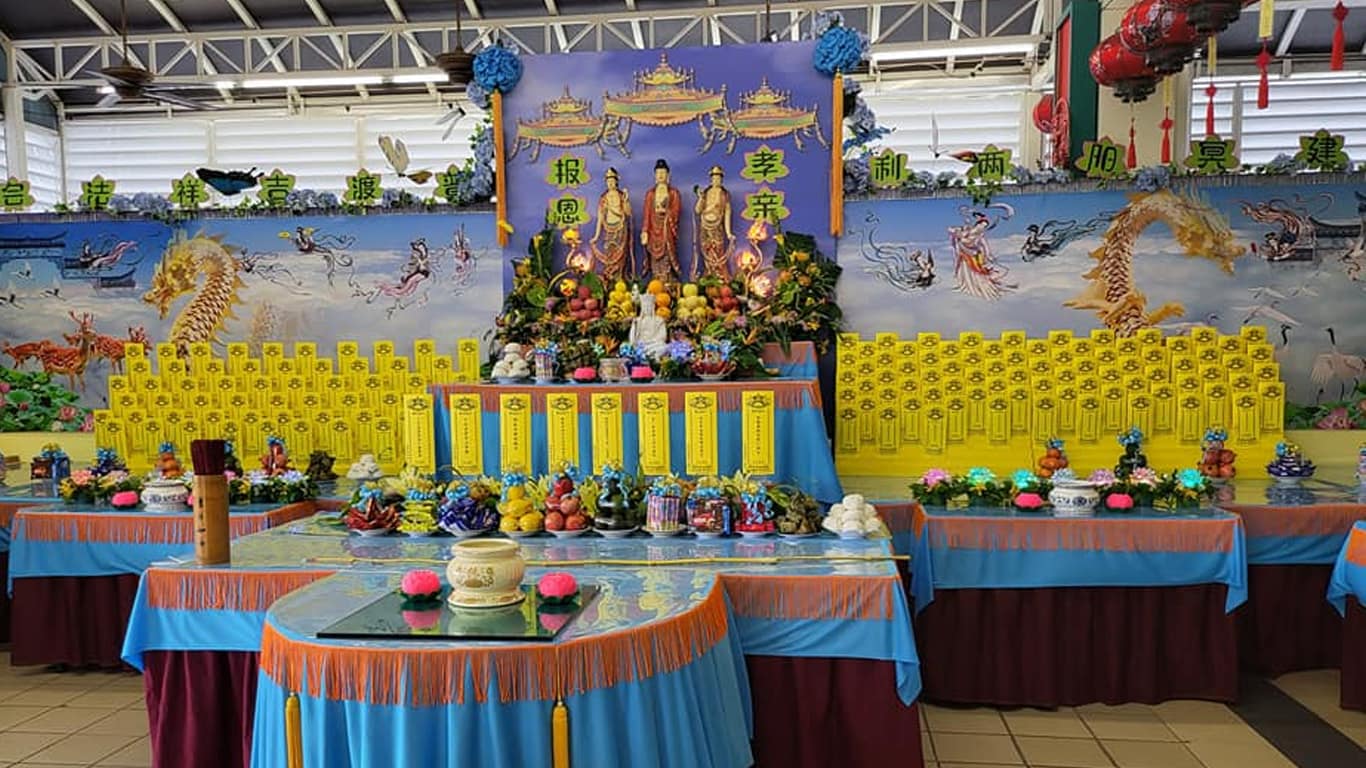
Che Hung Lecture Hall’s Annual Ullambana Dharma Assembly (held in the 7th lunar month) invokes the Buddha’s power to liberate ancestors, unsettled spirits, and all beings from suffering. The ritual integrates three core texts, bridging worldly and spiritual aims:
The Sutra on the Profound Kindness of Parents:
This sutra teaches that a parent’s love is immeasurable, and no effort can fully repay their kindness.
The Buddha reveals the highest form of filial piety: guiding parents toward Dharma practice, transforming worldly gratitude into liberation.
The Liturgy of Amitabha:
Buddha Merges repentance, chanting, and trust in Amitabha’s vows to dissolve karmic chains and plant seeds for rebirth in the blissful Pure Land. It frees practitioners from present burdens while steering them toward enlightenment through faith, vows, and action.
The Great Mengshan Food Offering:
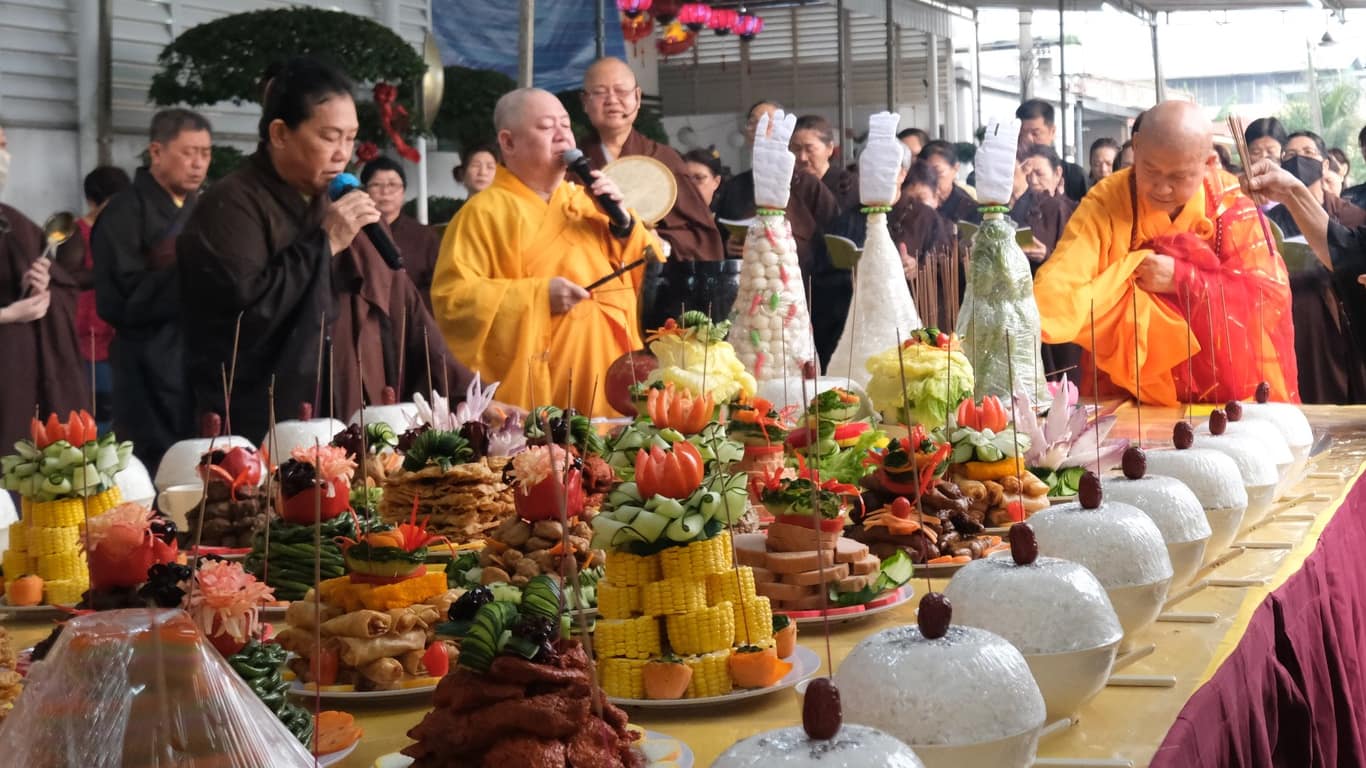
This tantric ritual combines esoteric food offerings with Mahayana teachings, providing Dharma nectar to suffering spirits and breaking the barriers between life and death. By making offerings, practitioners cultivate compassion, reflect on karma, and embrace the bodhisattva path, benefiting both the living and the departed.
These three scriptures form a complete path
- Sutra on Parents filial devotion as a foundation
- Amitabha Liturgy Pure Land aspiration as the goal
- Mengshan offerings compassionate giving as the way to save all beings
Together, they help release karmic bonds, repay past debts, and open the door to liberation for both oneself and others.
Ksitigarbha Dharma Assembly
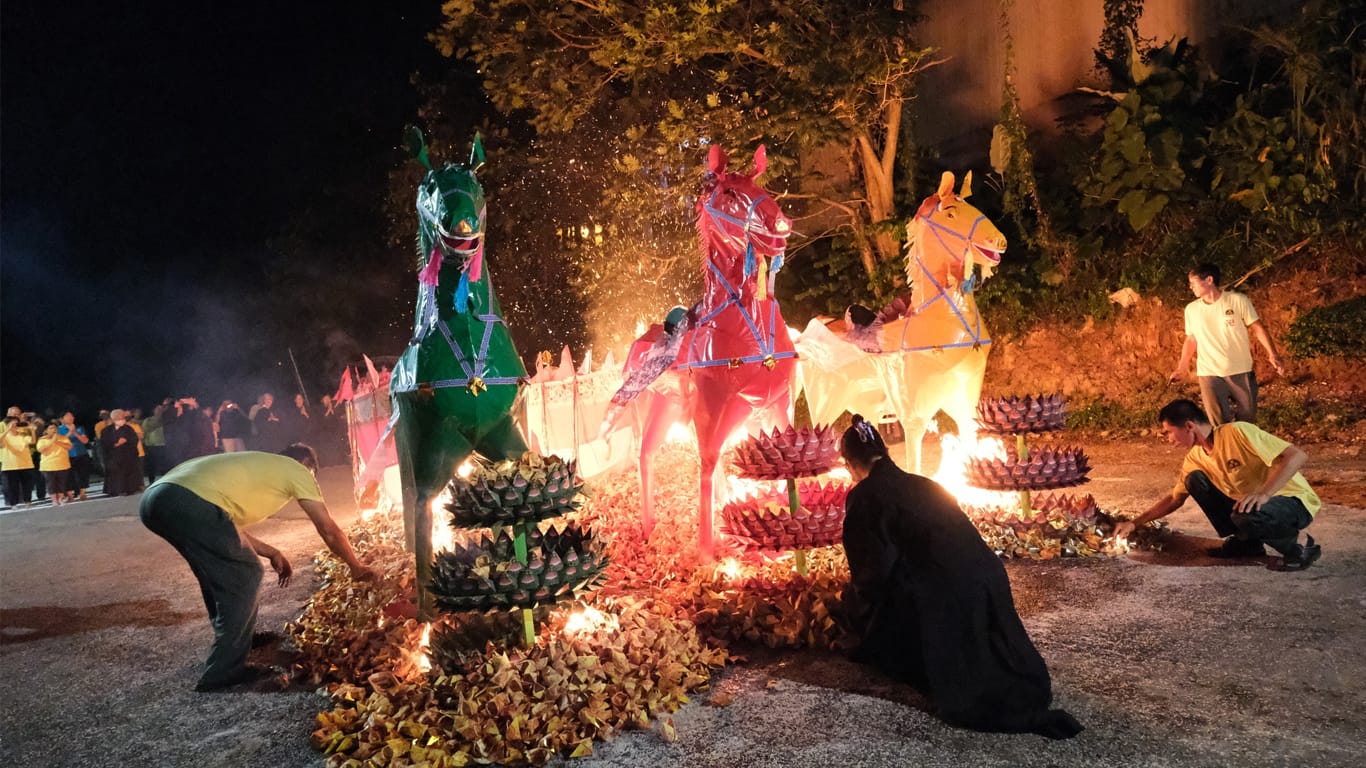
Cihang Lecture Hall, while rooted in Guanyin’s compassion, also draws strength from Ksitigarbha Bodhisattva’s vow to liberate all beings.
Every year, during the seventh lunar month, a Ksitigarbha Dharma Assembly is held, where the collective merit from a year of chanting the Ksitigarbha Sutra and the holy name is dedicated to departed souls, ancestors, and karmic creditors, helping them find peace and be reborn in the Pure Land.
The ritual honors Ksitigarbha’s pledge, “I will not attain Buddhahood until hell is empty,” while also aligning with the traditional Filial Piety Month’s tradition of ancestral reverence. Through the power of the Buddha’s teachings, it connects the living and the departed, allowing practitioners to deepen their understanding of karma and cause, more than just aiding spirits. The assembly nurtures bodhicitta – the awakened heart that vows to achieve enlightenment for the sake of all.
The Liturgy of Emperor Liang
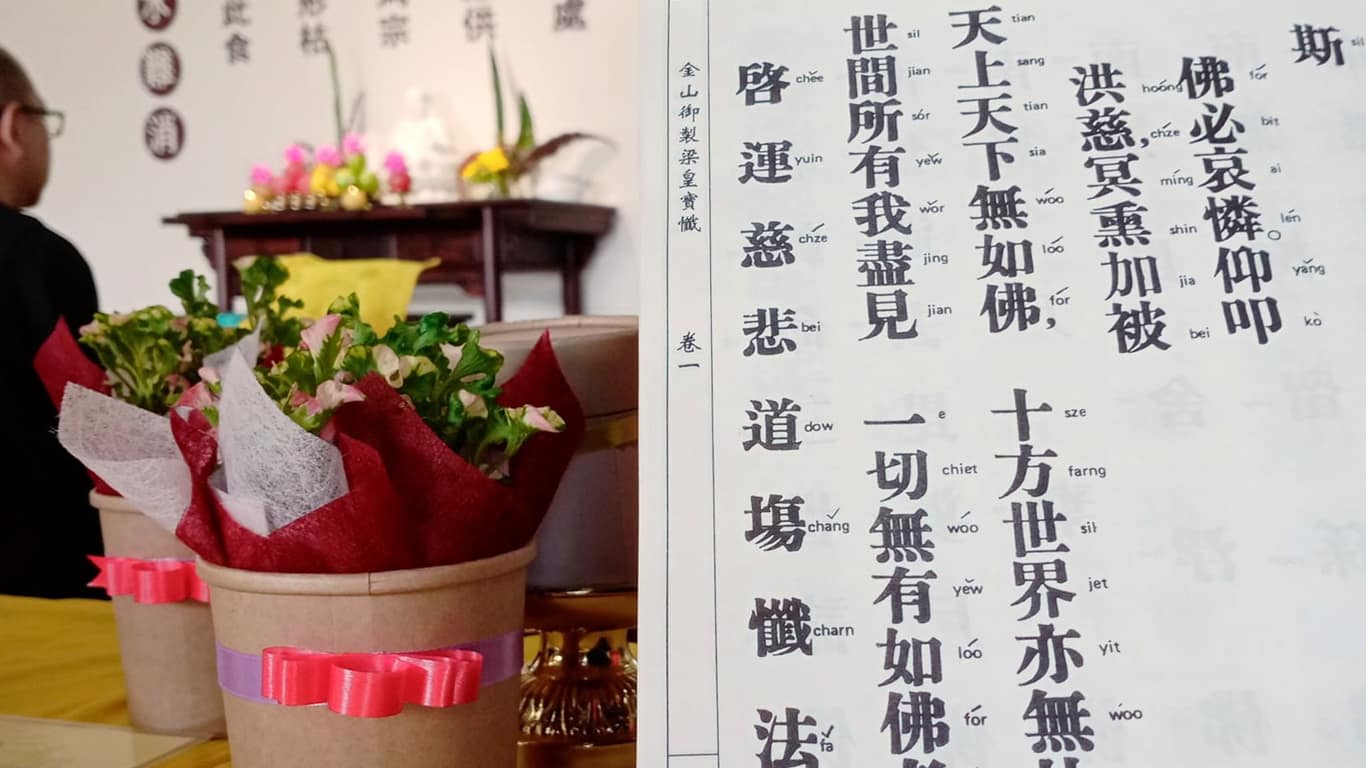
The Liturgy of Emperor Liang (Liang Huang Bao Chan) originates from Emperor Wu of Liang’s effort to liberate his wife, Empress Xi, from suffering. Legend says Empress Xi, jealous and quick-tempered in life, was reborn as a giant serpent trapped in agony after death.
The emperor commissioned Buddhist mastersto create the Liturgy of Compassionate Dharma Assembly; through days of repentance rituals and sutras chanting, Exoress Xi was ultimately free from her serpent form and reborn in the Heaven.
Passed down for over a thousand years, this vital repentance ritual, through confession, prostration and devotion to the Buddhas, helps practitioners purify body and mind. It remains an essential practice in Chinese Mahayana Buddhism, bridging ancient compassion with modern spiritual healing.
Wesak Day
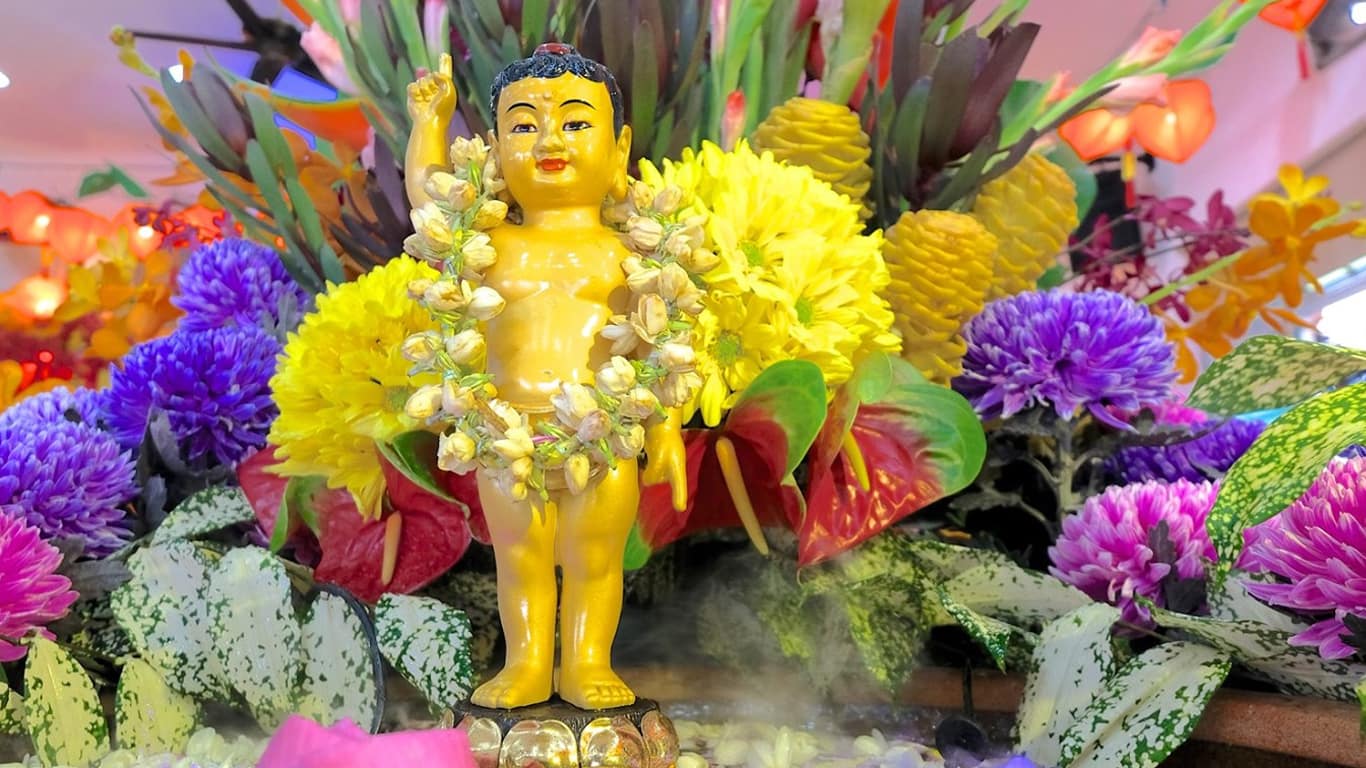
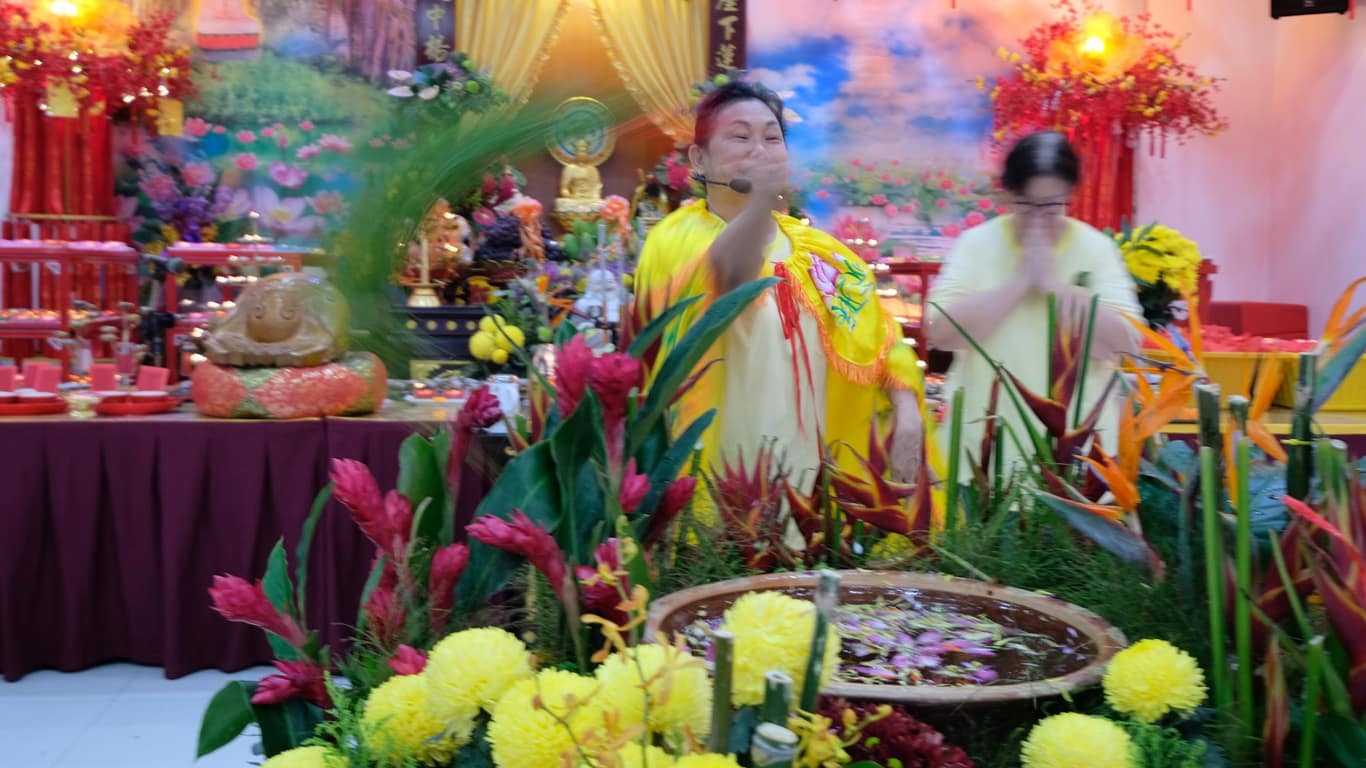
Wesak Day celebrates three sacred events in the Buddha’s life – his birth, enlightenment, and parinirvana – all believed to have occurred on a full moon in May. Observed on the 15th day of the fourth lunar month (the first full moon of May), Buddhists honor the day by bathing Buddha statues (symbolizing inner purification), lighting lamps (representing the dispelling of ignorance), and praying for all beings’ liberation.
More than a historical remembrance, Wesak invites reflection on the Dharma’s timeless relevance. It’s a call to embody the Buddha’s wisdom and compassion – transforming daily life into a path of awakening.
Avalokiteshvara Bodhisattva
Avalokiteshvara Bodhisattva is a manifestation of the great compassion of Dharma – Bright Tathagata, choosing to take the bodhisattva form to guide and save all beings. With a thousand hands and eyes, Avalokiteshvara responds to the suffering of the world, appearing wherever needed. It is said that those who sincerely chant “Namo Avalokiteshvara Bodhisattva” will open a channel to his grace, receive blessings, find peace, and be freed from difficulties; earning him the title “The Boat That Ferries Beings Across the Sea of Suffering.”
Three sacred dates in his life fall on the 19th day of lunar months:
- Birth – 2nd lunar month
- Enlightenment – 6th lunar month
- Monastic Renunciation – 9th lunar month
Collectively called the Guanyin Festivals, these days honor his spiritual journey. On the 19th of the 9th lunar month, Cihang Lecture Hall holds a grand Dharma assembly, commemorating his renunciation of worldly life. Through sutra recitations, prostrations, and collective vows, followers cultivate compassion, deepen their connection to the bodhisattva, and pray for the liberation of all beings.